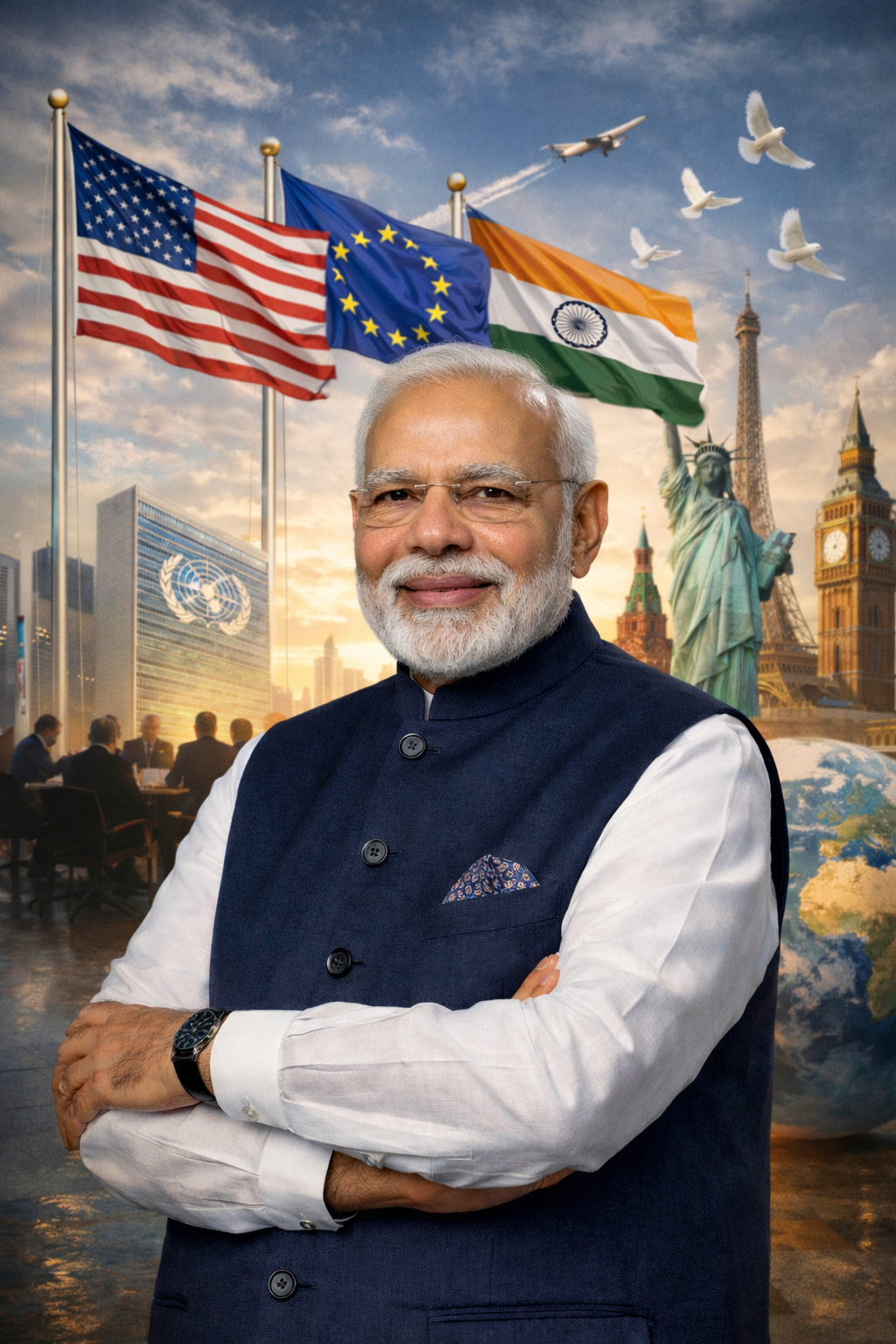
Narendra Modi is an important person in India today. He has had an impact on what people talk about and how the country is run. Narendra Modi has been the Prime Minister of India since 2014. He is a person in Indian politics. Some people really, like Narendra Modi because he makes decisions quickly. Other people do not like the way Narendra Modi runs the country.
The Narendra Modi case study goes past the news. What people are saying about him. It looks at Narendra Modi’s background, how Narendra Modi leads the decisions the problems Narendra Modi faced and how things will be in the long run. The goal is not to say Narendra Modi is good or bad but to understand how a leader like Narendra Modi works in a country, like India with many different parts.
Early Life and Social Background
Narendra Damodardas Modi was born on 17 September 1950 in Vadnagar, which’s a small town, in Gujarat. The Narendra Damodardas Modi family did not have a lot of money. His father sold tea to make a living. Narendra Damodardas Modi would often help his father at the tea stall when he was a kid.
Modi had some times when he was young. He did not have a lot of money. He had to be very disciplined. Every day was a struggle for him. This is not like some leaders who went to fancy schools. Modi’s early life was about dealing with problems that regular people face. On this became a big part of who he is, as a leader. People see him as someone who made it on his own and really gets what ordinary people want. Modi understands the struggles of common citizens because he went through similar things himself.
Education and Ideological Influences
Modi finished school in his town before he went on to study Political Science from home. He got a degree in this subject after that. People often talk about how Modi did in school but he learned most of what he knows about politics by actually doing it not just sitting in a classroom. Modi learned a lot about politics by being involved in it which helped him more than reading about it in books. Modi’s education in Political Science was very helpful, to him.
Modi was shaped by nationalism. He also believed in being organized and having a cultural identity. The time he spent with volunteer groups had an impact, on the way he thinks. These groups taught him that it is important to have a plan be committed and think about the term. Modi learned a lot from nationalism and the volunteer groups he worked with.
Entry into Politics and Rise Through the System
Narendra Modi did not start his career in politics by running in elections. His career actually started when he worked for an organization. Narendra Modi joined the Rashtriya Swayamsevak Sangh at a young age and he worked for them as a volunteer all the time. This is what taught Narendra Modi how to get people excited about a cause how to be disciplined and how to come up with a plan, for politics.
Later he joined the Bharatiya Janata Party. Started taking part in active politics. The Bharatiya Janata Party gave him a lot of work to do. He had to plan elections and take on leadership roles in the Bharatiya Janata Party.
He became the Chief Minister of Gujarat in 2001. That was a big change for him. As the Chief Minister of Gujarat he worked for, than ten years and people started to know him as a person who really cared about making Gujarat a better place.
In the year 2014 Modi led the Bharatiya Janata Party to a national win and he became the Prime Minister of India. This was a sign that the country was moving towards having leaders who are in charge like the Prime Minister at the centre of the government. The Bharatiya Janata Party and Modi were very happy about this win. Modi, as the Prime Minister of India was a change.
The way Narendra Modi leads is really interesting. Narendra Modi has a unique leadership style. When it comes to governing, Narendra Modi does things his way.
- He is very strict. Likes to get things done on time
- Narendra Modi is also very good at communicating with people and making them understand what he wants to do
- The way Narendra Modi makes decisions is very different from the way leaders he likes to take charge and make things happen
Narendra Modi’s leadership style is a big part of who he is and how he governs. People have a lot of opinions about the way Narendra Modi leads some like it. Some do not. But one thing is for sure Narendra Modi is a strong leader and he always tries to do what he thinks is best, for the country.
Decision-Making and Authority
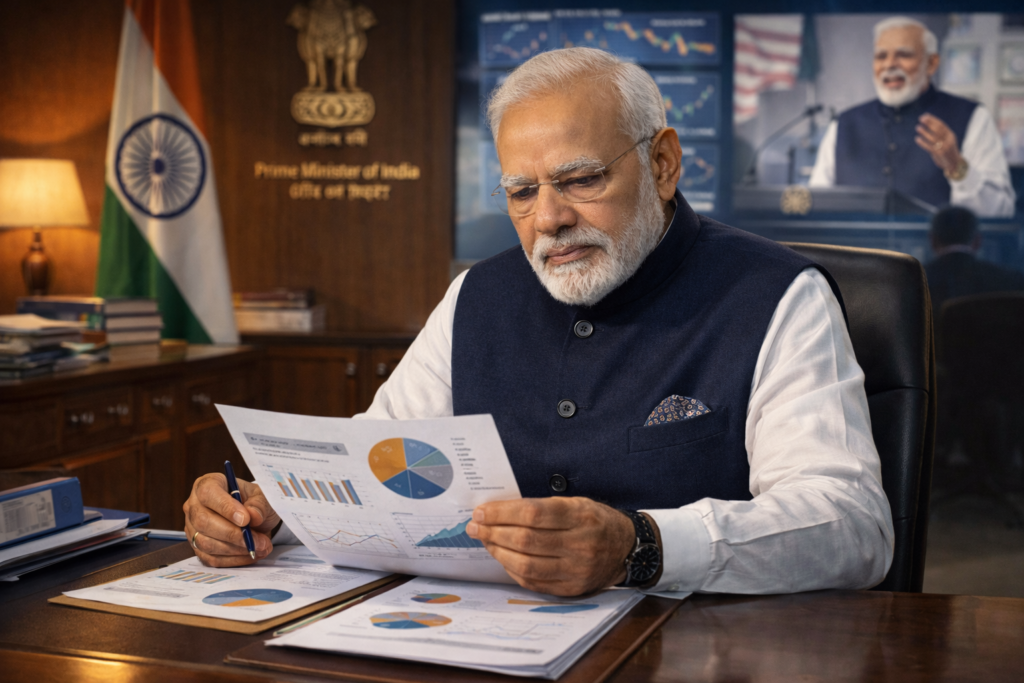
The way Narendra Modi leads is usually seen as strong and controlled. Big decisions are generally made by him. He wants things done on time and checked closely. People who like Narendra Modi think this is a way to get things done quickly but people who do not like him think it stops people from discussing things openly in meetings. Narendra Modi’s leadership style is still talked about a lot and people have opinions, about it.
Communication and Public Engagement
Modi is really good, at talking to people. He talks to citizens directly when he gives speeches uses media and attends public events. The way Modi speaks is easy to understand it is emotional. He often uses symbols to get his point across. This helps Modi stay important in politics and people trust him. Modi is able to connect with a lot of people because of the way he communicates this is one thing that makes Modi stand out.
Handling Crises and Challenges
When the country is facing problems Modi makes sure people see him and hear what he has to say. He does this whether he is talking about changing the economy or dealing with emergencies that affect the public. When Modi is, in charge the government uses a lot of technology. Keeps track of what is going on with data. They also make sure everyone is working together by coordinating things from a place. Modi’s leadership is always visible and active so people know what is happening with the government under his leadership.
Governance and Key Policy Initiatives:
Economic Reforms and Structural Changes
Under the leadership of Modi the country saw some changes in the economy. The government started programs, like Make in India to help make things in the country. They also brought in the Goods and Services Tax, which is also called GST to make it easier for people to pay taxes. The Startup India program was started to help people start their businesses and think of new ideas. Modi’s government did all this to help India’s economy grow.
These reforms were really big. They changed a lot of things. They were supposed to make things better, in the run but what happened right away was that some people liked them and some people did not like the reforms at all.
Social Welfare and Inclusion Programs
Modi’s way of governing has one thing that stands out and that is social initiatives. He started programs to help people with things like using the bathroom, getting money having a home and being able to use computers and the internet. These programs were very big. Helped a lot of people. The main goal was to get help to the people who needed it. They used computers and the internet to make sure the help got to the people and to make it happen more quickly. Modi’s social initiatives are still a part of what he does.
Foreign Policy and Global Engagement
Narendra Modi, as the Prime Minister really wanted India to be seen by the world. He thought it was very important for India to have relationships with other countries. Narendra Modi wanted India to be friends with countries and he wanted people all over the world to think good things about India. He also wanted India to be a country that people respect. This way Narendra Modi was able to get India noticed by people, around the world and at the same time people started to watch what India was doing very closely.
Challenges and Criticism
When we talk about leadership we have to consider the things people say about it. No study of a leader is complete, without looking at what people do not like. Narendra Modi’s time as a leader has been questioned because of how democratic institutions, social cohesion and policy consultation have been handled. People who do not agree with Narendra Modi say that when one person has a lot of power it can be hard for people to talk about things and disagree with the leader. Narendra Modi’s leadership has been criticized for this reason.
We have a lot of problems to deal with. Economic inequality is an issue. Employment generation is another one.. Then there is social polarization. People often talk about Modi’s governance. They wonder how to make decisions without ignoring what everyone else thinks. We need to figure out how to balance being decisive with listening to viewpoints in a society like ours where everyone is very different. Inequality and employment generation are still major concerns.
Impact and Long-Term Legacy
Narendra Modi has really changed the way politics works in India. He has made a difference in the way election campaigns are run and how the government talks to people. Narendra Modi has also changed how leaders are seen by the public. People who like Narendra Modi say he knows what he wants to do. He does it. On the hand people who do not like Narendra Modi think the country needs to have stronger rules so that one person cannot make all the decisions. Narendra Modi is still a figure in Indian politics and people have different opinions, about him.
People around the world think of Modi as the face of India that is getting stronger. Modi’s leadership has made India famous. Now India has to live up to that. What people will remember Modi for depends on how India’s institutions change and if India can keep growing in a way that includes everyone. Modi’s leadership will be judged on how India does over time and if Modi’s India can really make life better, for all the people of India.
SWOT Analysis: A Closer Look at Modi’s Leadership:
Strengths
Modi is really good at leading people because he is very clear about what he wants to do. He really believes in it. The way he talks to people the way he runs the country and the way he is known over the world make people feel safe and they know what to expect from him. Modi’s ability to lead is what makes him strong. He has communication skills he is in control of the administration and people all over the world know who Modi is. All these things help to keep the country stable and make sure that the policies do not change suddenly. Modi’s leadership is very important, for the country.
Weaknesses
When you have all the power in one place that is a problem. The fact that everything depends on one person, the leader is also an issue. This can be very bad for the institution because it is not strong when it relies much on one person. Centralization of power and reliance on leadership remain key limitations. If something happens to this leader the institution can be in trouble because it is used to just one person being, in charge.
Opportunities
India has a lot of people and this is a big plus for the country. The fact that India is getting more digital and is important to the world means that it can change and grow in the term. This can happen if India has leaders who can make decisions and stay in power for a long time. India is a place for this kind of transformation to happen because of its people and its importance in the world. The digital expansion, in India is also an opportunity for the country to grow and change. Indias global relevance is another reason why it can do well in the term.
Threats
We have to deal with division, economic pressure and institutional stress. These things can cause a lot of problems if we do not do something about them. We need to make sure everyone is included and that we listen to what people have to say. This is the way we can make good decisions and avoid problems. Social division, economic pressure and institutional stress are issues that we have to face.
Narendra Modi is a leader who has made an impact on Indian politics and the way the country is run. The way Narendra Modi leads shows that he is very ambitious, disciplined and good at getting things done. At the time people are still talking about whether Narendra Modi is good for democracy and if he includes everyone, in his decisions.
For students, researchers, and leadership learners, Narendra Modi’s journey offers important lessons—both in the power of decisive leadership and the responsibilities that come with it. His story is not just about one individual, but about how leadership shapes a nation in a rapidly changing world.