The Partition of India: A tale of agony and hope and a nation being born.
The partitioning of India in 1947 is still one of the most eventful and touching stories of the history of the subcontinent. It was the drawing of the lines on the map, but not only on the map, and it was the life-changing event with the sense of uncertainty, heartbreak, hope, and transformation not only to the millions of people. To this day, seven decades later, the effects of Partition still influence the identity of India, its politics, society, and memory.
A Quick History: The India that was on the Edge of the Partition.
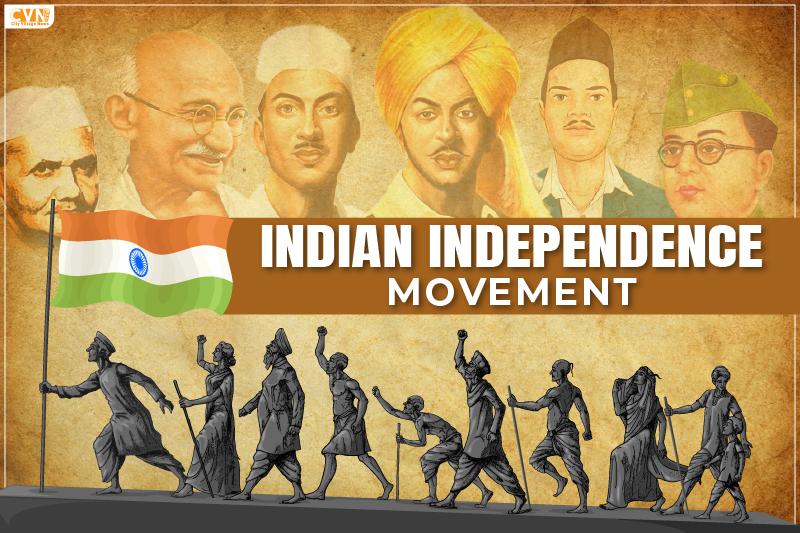
The British had occupied India in nearly two centuries prior to gaining independence. The struggle of Indians to acquire freedom in this era was ruthless- movements organized by Mahatma Gandhi, Jawaharlal Nehru, Subhas Chandra Bose and hundreds of thousands of other prominent as well as not so prominent heroes. But with the freedom struggle there were also emerging political tensions and most notably between the Indian national congress and the Muslim league.
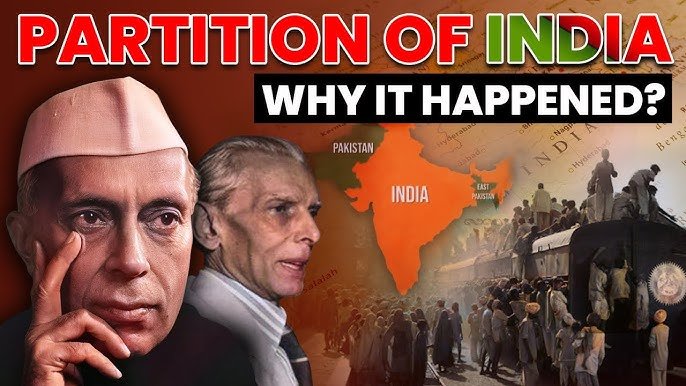
The Muslim League led by Muhammad Ali Jinnah believed that Muslims required their own nation where they would be politically safe. On the other hand, the vision of the Congress was to have a united and secular India. When the British power was deteriorated, the communal mistrust was intensified, and riots broke out in some regions of India. Towards the middle of the 1940s it had become more and more hard to envisage one India in which all the communities felt safe and represented.
The British who were keen to quitting India within a short period following the Second World War resolved that Partition was the sole way to prevent any more communal violence. In this way started the process which was to alter the fate of India forever.
Developing the Line: The Radcliffe Boundary.
Sir Cyril Radcliffe was assigned the task of partitioning India into two countries- Indian and Pakistan, a man who had never even been to India. He was left with little more than five weeks in which to divide the huge territory, apportioning provinces, districts, rivers, and villages, and even households. Punjab and Bengal were divided by the Radcliffe Line which laid the boundaries between them.
This has been a painful decision that was rushed. The boundaries were made depending on the scanty maps, old census records and political influences. On August 15, 1947, the day India became free, millions of people got up only to realize that their homes were not part of them anymore, but of another nation.
The Human Cost: One of the Greatest Migration of All Times.
The Partition of India led to one of the greatest migrations ever to have occurred in the world. Between 14 and 18 million people crossed borders in a few months- Hindus and Sikhs went to India and Muslims to Pakistan. Households moved on foot, trains, and bullock carts hoping to be safe.
However, this was not a peaceful movement. There were riots of violence, massacres, looting as well as unimaginable atrocitieson either side. Trains with refugees left not with optimistic migrants but with dead bodies. A lot of women were subjected to awful violence. Villages were set to fire, homes of children were deserted, and people were deprived of everything overnight.
The Partition of India to ordinary people was not an act of political event but rather a tragedy of personal interest. It disintegrated families, friendships and communities that had coexisted over generations. Even now, victims recall the trauma as though it happened yesterday.
The Birth of India: A Nation Born through Suffering.
India seized its freedom with hope and will even in the middle of violence. India gained full independence on August 15, 1947, without the control of the British colonialists. Jawaharlal Nehru gave his landmark speech of Tryst with Destiny where he assured to create a democratic, inclusive, and progressive India.
But the difficulties were tremendous. Millions of refugees had to be absorbed by India which had to provide them with shelter, food and rehabilitation. Economy was low, industries had been restricted and resources were few. The government and ordinary people were tirelessly trying to restore lives, establish employment and restore sanity.
The other sensitive issue which India had to undertake is defining itself as a secular and democratic nation. The Indian Constitution ensured equality to all the citizens of the country irrespective of their religion, caste, or gender, and India became a unique nation based on diversity and togetherness.
Partition on India- Long-term Effect.
The effects of the Partition of India were profound, and long-lived:
1. Social and Cultural Change.
The migration introduced new cultures, language and tradition in various regions of India. Cities such as Delhi, Punjab and Kolkata were developed with the assistance of the refugees. They have made contributions to business, arts, politics, literature and cinema and made their contributions to the fabrics of the Indian cultur
2. Political Bad Blood With Pakistan.
The division left two countries which had no clear differences and most importantly in Kashmir. The India-Pakistan conflict has resulted in wars, military strains and diplomatic struggles, which up to today exist. The peace efforts have been tried numerous times however, political and emotional injuries are deep.
3. Harmful and Psychological Traumas.
Partition is a family long-standing memory to millions of families. Grandparents and great-grandparents continue telling the stories about the place they left in left in Lahore, Karachi, Rawalpindi, Dhaka or Amritsar.The identity on either side of the border remains influenced by trauma of separation.
4. Empowering the Secular and Democratic India.
India became even more determined in the concept of unity in diversity because of the violence of Partition.The leaders learned that religion was not a requirement of being a citizen or having rights.This vision was reflected in the Constitution of India which was adopted in 1950 as it developed a country in which all the communities would live at peace.
Tales of people in desperation.
Although the events that happened during the Partition of India were horrible, there were also instances of humanity that teaches us about the power of compassion.Great numbers of individuals took risks with their lives to save the neighbors of other groups of people.Others hosted them and others assisted them to cross the frontiers.These narratives demonstrate that there is light during the darkest moments of time, which can be found in kindness and daring.
These feelings have been beautifully portrayed by writers, filmmakers as well as historians.The pain and nostalgia and perseverance of those who were caught in the middle of this period in the Indian history are echoed in partition literature by Khushwant Singh to Saadat Hasan Manto.
Why It Still Matters Today
The Partition of India is a significant subject to understand since it still has an impact on relationships, politics, culture, and the memory of people.It tells us of the hazards of intolerance, segregation, and solidarity.Simultaneously it also teaches us the importance of unity, empathy.
Conclusion: The Partition of India—A Lesson for Generations
The Partition of India was a turning point that changed millions of lives and shaped the destiny of an entire region. It was a moment of sorrow but also a moment of rebirth. From the ashes of violence and displacement, India emerged as a nation built on hope, democracy, and diversity.
Today, as India continues to progress, it carries the memories of Partition not to dwell on the pain, but to learn from it. It reminds us how fragile peace can be, and how important it is to build bridges of understanding. The story of Partition is a reminder that India’s true strength lies not in borders or politics but in the unity of its people and the spirit of humanity that has guided the nation since independence.
7288 characters | 1178 words