The India-US Relations: A Future making Partnership.
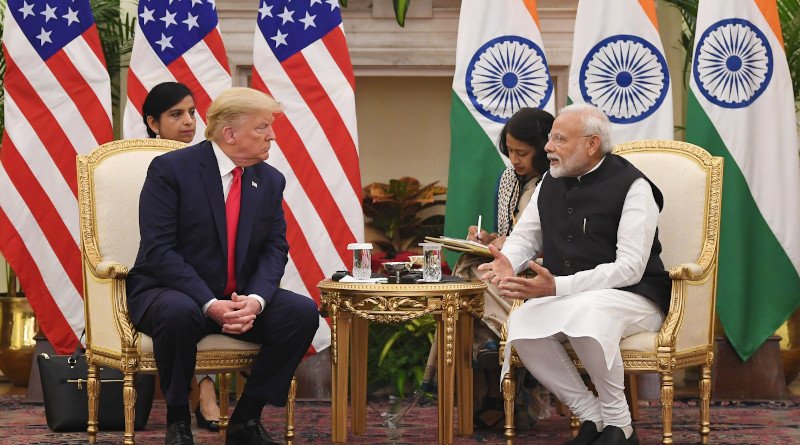
The relations of India to the US have developed to become one of the most important bilateral relations of the twenty-first century.The peculiarity of this interaction is that the two countries, although having different historical experience, geography, and political structures, managed to meet in the middle of their democratic values, economic interests, and strategic priorities
.In the case of India, the transition of the country towards minimal involvement in the Cold War period to a trusted partner of the United States is not only a change of foreign policy but also an indication of rising confidence in the world.
India today is not just an up-and-coming powerhouse, but it is a country that occupies center stage discussions when it comes to matters concerning the region and the world at large.And in this changing environment, the India-US relationship also acquires new dimensions.
India- US Relations History.
The initial years following independence of India in 1947 were characterized by apprehensions between each other.The non-aligned policy based on India wanting to maintain its strategic independence at times went against the Washington expectations of the Cold War.In the meantime, close relations of the United States with Pakistan caused tension.But even in that period there were no grounds to lack foundations of cooperation.
The relations between India and the US were collaborative in other areas such as agriculture, education and technology and projects such as the Green Revolution brought changes to India that were transformative.
The relationship started to change substantively in the 1990s when India started to embrace economic liberalization.The US realised how vast the India market was, how talented the labour market is and how the world is becoming increasingly more influential.
In the case of India, a close involvement with Washington was consistent with its desire to have an economic relationship with the country, as well as its interest in adopting sophisticated technology.It reached its peak in 2005 with the historic India-US Civil Nuclear Agreement that marked trust, respect and the start of a modern strategic alliance.
The Strategic Significance of India.
India has a special strategic value in the current international system.It is at the center of the maritime security, global trade routes, and stability of the region due to its geographical position in the Indo-Pacific region.Since the big powers are vying to have influence in Asia, India has been a balanced yet aggressive country, thus the country is a critical region in Asian politics.To the United States, the activity of interacting with India is critical in terms of ensuring a free, open and rules-based Indo-Pacific.To India, a relationship with the U.S. is a way of enhancing its security structure and offers an alternative to its strategic choices.
On top of the geopolitical considerations, the fact that India is a fast-growing economy puts an additional dimension of the meaning.India has turned into the center of opportunity, having a young population, emerging industries, and increasing capabilities in the world of technology and innovation.
The United States is a natural partner with India due to the economic dynamism of the country, which is interested in closer relations with those markets that are developing and emerging as leaders in the innovation sphere.
Trade Relations and Economic Processes.
Over the last two decades, the trade between India and the US has increased significantly to record levels every year.The United States is currently among the biggest trading partners of India, and India is among the most rapidly expanding markets of the American businesses.Economic relationship is much deeper than goods as it encompasses services, technology, research and digital collaboration.The U.S. has a high level of participation by Indian IT companies, which are creating jobs, enhancing innovation, and enhancing economic interdependence.
Meanwhile, the American corporations in India take part in the production, digital technology, e-commerce, energy and financial services.This is a two-way flow of talent, investment and technology which is a pillar of the partnership. Still, challenges remain. There is friction sometimes due to market access issues, tariff disputes and regulatory barriers.
Nevertheless, the two governments are aware that the advantages of the economic cooperation greatly outweigh the differences.In the case of India, the U.S. will continue to be a good investment, innovation and technology hub.To the U.S., India is a reliable ally in the development of secure supply networks and over-reliance on other markets
Cooperation of defence and strategy.
Defence cooperation is one of the most formidable foundations of the India- US relationship today.Since these military drills up to high-tech defence equipments, the alliance has expanded so much in the past ten years.India has also procured the state of the art American defence equipment including transport aircrafts, helicopters, and surveillance equipment and this enhances its military power.
The two countries also work in unison using such strategic arrangements as the Quad (which includes India, U.S., Japan, and Australia) that aims at the creation of the stable and open Indo-Pacific.Although India does not engage in the formal military alliances, it extends its operational and strategic collaboration with the United States in the manner that is beneficial to its own security needs.
Technology, Innovation and Space Cooperation.
.The India-US partnership has come with new opportunities as India has emerged as a world-based technology giant.These fields of cooperation include artificial intelligence, cybersecurity, semiconductor manufacturing, digital infrastructure, and clean energy.The American universities, start ups and technology giants are closely linked to the Indian innovation ecosystem.The other thrilling dimension is space cooperation.NASA and ISRO have worked together in a number of missions and more missions are being developed.In the case of India, its collaboration with the U.S helps it to achieve its goal of being a great spacefaring country.On the part of the U.S., India is a source of scientific skills, technological prowess and ally in the space exploration endeavor.
People-to-People Ties.
The friendship between the Indians and the USA is perhaps the most human and hearted part of the relations between India and the USA.The Indian diaspora is one of the most prosperous and successful immigrant groups in the United States that acts as a cultural and economic bridge.Indian skilled workers in technological, health care, education and research give a lot back to the society in America and enhance the international image of India.
This relationship is further strengthened by educational interactions, tourism, cultural interactions and digital connectivity.These human relationships make the India-US relations exceptionally cordial than the formal relations.
These are the difficulties and the Way ahead
Like any other significant relationship, India-US relations are not without problems.The discrepancies in the trade policies, visa regulations, climate policies and other international political matters come up every now and then.The strategic independence that is often prioritized by India occasionally causes the existence of Indian foreign policies that do not quite fit in the expectations of Washington.Nonetheless, the two countries have been shown to be willing to live with the differences by engaging in dialog and appreciating each other.
The case of India, it opens access to the high-level technology, economic opportunities, and more powerful voice on the global arena.To the U.S, the alliance of India helps in maintaining stability in the Indo-Pacific and enhances global democratic principles.
Conclusion
Conclusion
India–US relations today reflect a partnership rooted in shared aspirations and built on trust. India’s growing global stature and America’s continued leadership create space for meaningful cooperation across sectors. As both nations navigate the complexities of a rapidly changing world, their partnership is likely to become even stronger. For India, this relationship is not just about diplomacy—it is about shaping a future where its ambitions, capabilities, and identity find their rightful place on the world stage.